
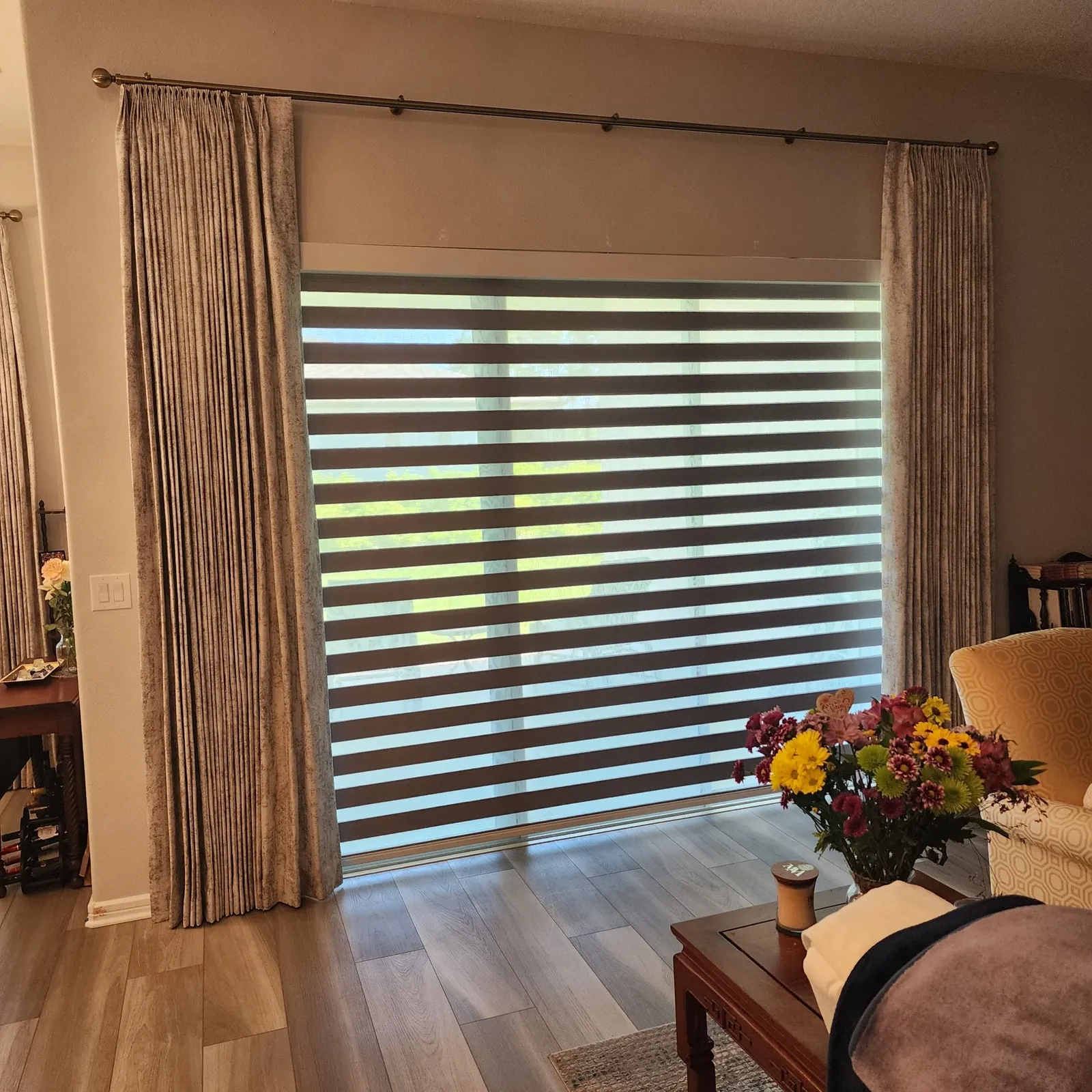
Motorized shades earn their place on two kinds of windows: the ones you touch every single day, and the ones you cannot reach without a ladder. In a St. Pete home that usually means the west-facing sliders that cook the living room by three in the afternoon, the transom over the stairs, and the wide lanai opening where a manual shade is heavy enough that nobody bothers. We measure, build, and install motorized shades as part of the full window treatments service we have run from our St. Petersburg workroom since 2000.
Verified Local Business
Two Google profiles. One St. Pete team you can verify.
29 combined five-star Google reviews across both profiles. Licensed, insured, and running our own St. Pete workroom since 2000.
5001 4th St N, St. Petersburg
Our main location at 5001 4th St N, St. Petersburg, FL 33703. Window treatments, wallpaper, and upholstery from one St. Pete studio. We still come to you for the in-home consultation.
View on Google Visit Our StudioWest St. Pete Location
A second verified Google profile for our West St. Petersburg studio at 3026 Central Ave Ste 551, St. Petersburg, FL 33712.
View on Google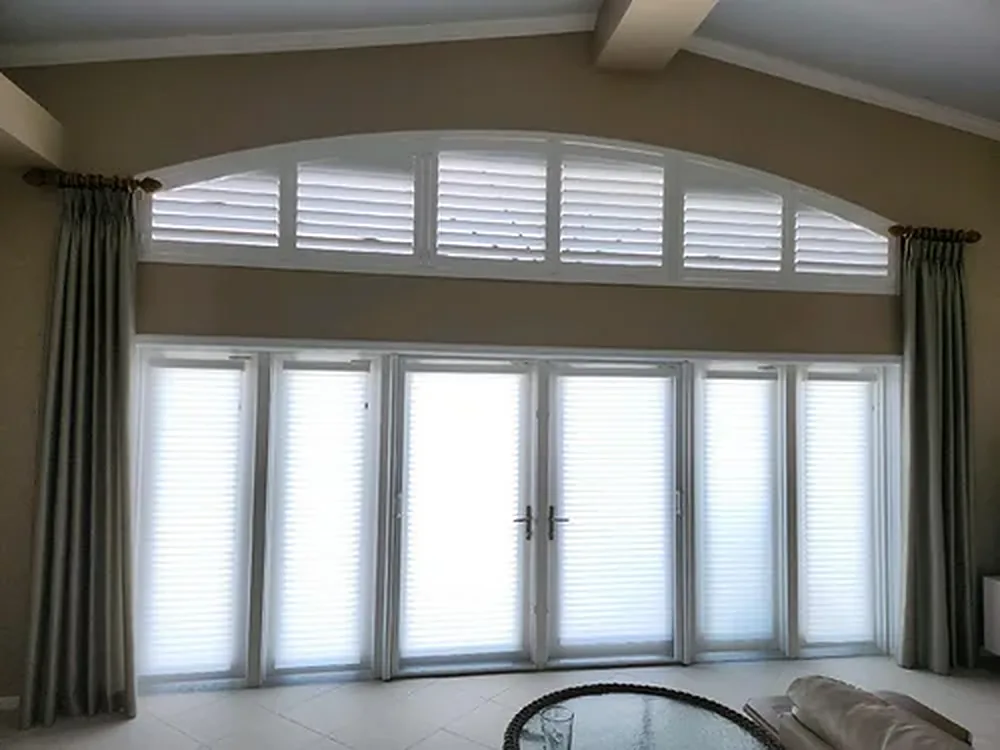
When Motorizing Is Worth It, and When It Is Not
Custom motorized shades generally run $450 to $1,500 per window installed, which is where most of the market sits nationally. A battery roller on a standard bedroom window lands near the bottom; a wide slider, a hardwired motor, or a designer fabric moves toward the top. Motorizing adds a few hundred dollars per opening over the same shade with a manual lift, so the honest question is which windows deserve it. Daily-use windows are the clearest case: the slider to the patio, the bedroom shades you run morning and night, the wall of glass facing the afternoon sun. Unreachable windows are the other case, and there the motor is not a convenience at all but the only practical way to operate the shade. Large or heavy shades belong on the list too, because a wide roller with a manual chain gets awkward fast.
The windows that rarely justify it are the ones nobody touches. A guest room shade you set once a season does not need a motor, and putting one there is how a quote gets expensive without making the house better to live in. We will tell you which windows in your own home fall into which group.
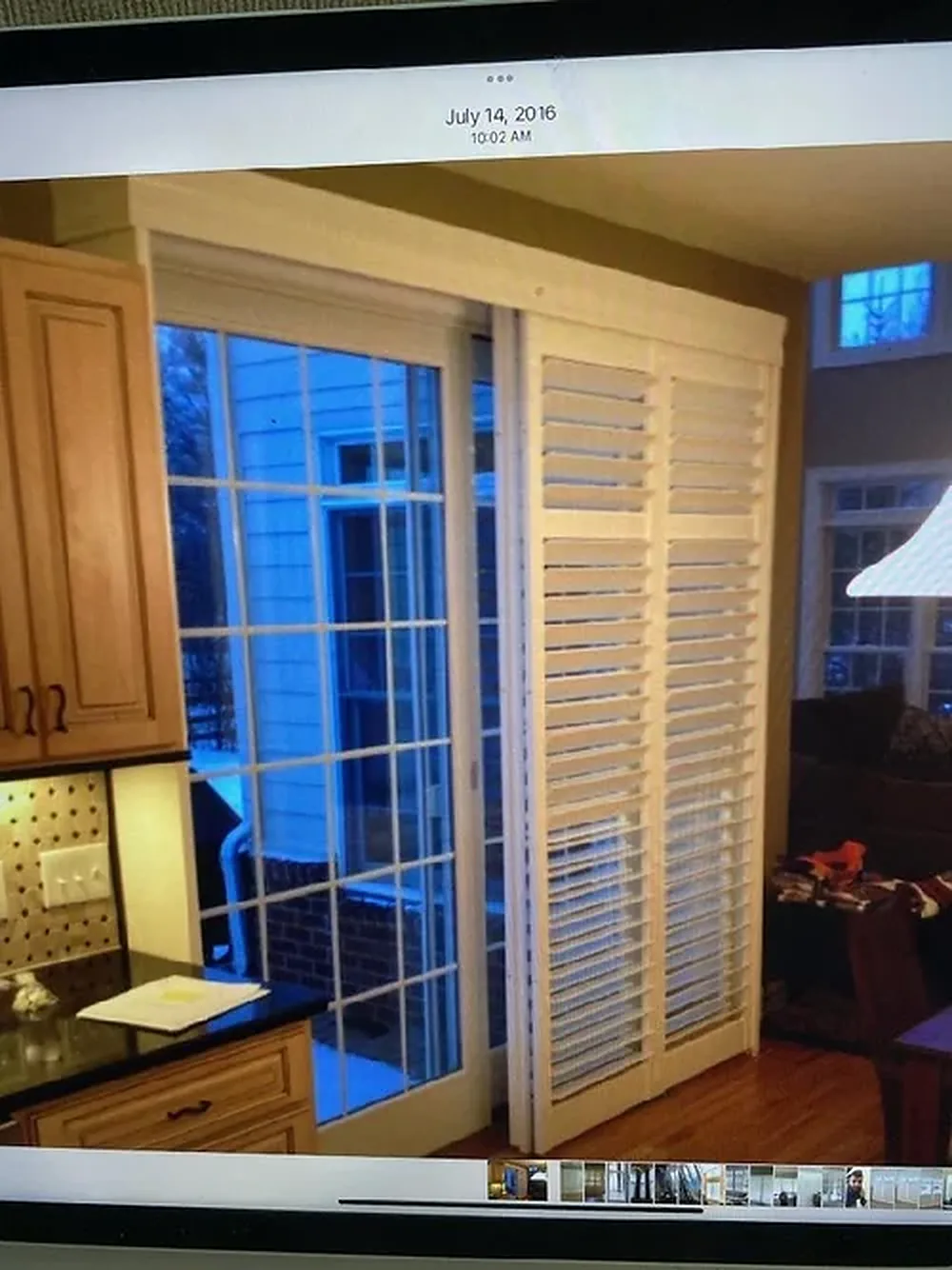
Daily-use windows: Sliders, bedroom shades, and any wall of glass you open and close every day.
Out-of-reach openings: Transoms, clerestories, stairwell landings, and skylights a manual lift cannot serve.
Wide or heavy shades: Lanai spans and oversized rollers where a manual chain is genuinely hard to work.
Sun-schedule rooms: West and south exposures where timed lowering keeps heat and glare off the room.
The Motorized Shades We Install in St. Petersburg
Almost any shade we make can be motorized, and the fabric decision comes before the motor decision:
- Motorized roller shades. The most common choice, and the cleanest look. A single fabric panel on a tube, in solar, light-filtering, or room-darkening weaves.
- Motorized blackout shades. Room-darkening fabric with side channels where you want true darkness, popular in bedrooms and media rooms.
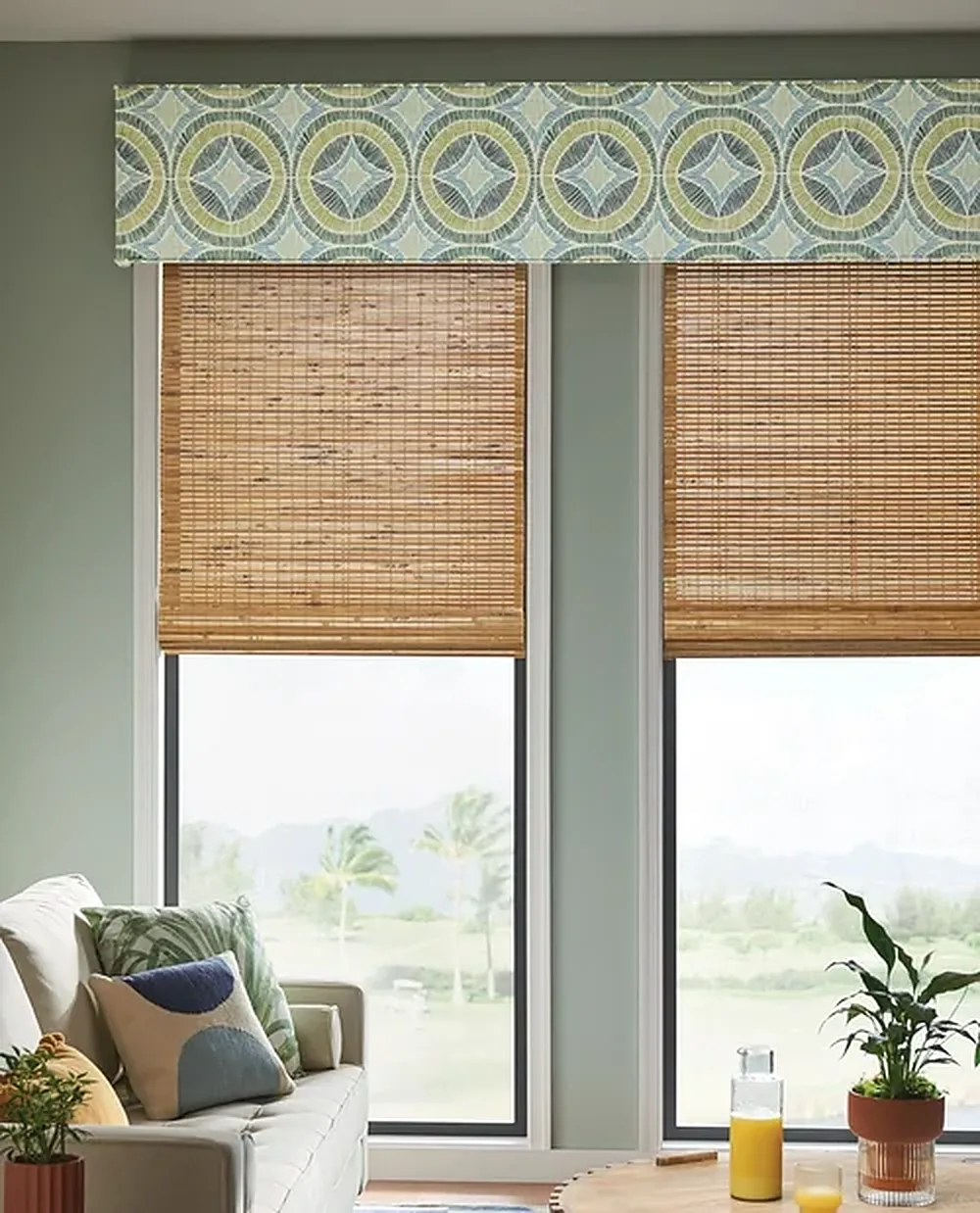
- Motorized solar shades. Open-weave fabric rated by openness factor, so you keep the daytime view out while cutting heat and glare. The workhorse on west-facing glass in Florida.
- Motorized cellular and Roman shades. Where you want the insulating structure of a cellular shade or the soft fold of a Roman, with the lift automated.
- Motorized patio and lanai shades. Exterior-rated fabric and hardware for wide openings, covered in more depth on our outdoor window shades page.
- Motorized skylight shades. Skylights are the definition of an unreachable window, and a motor is the only sane way to shade one.
- Motorized drapery tracks. Not a shade at all, but worth knowing about: we motorize custom drapery on a track for the same reasons, and shades and drapery can run on one remote.
Battery or Hardwired: The Decision That Actually Matters
Most homeowners ask about brands first, and the more useful question is power. Rechargeable battery motors need no wiring, which is why they are the default in an existing home. You charge them once or twice a year with a cable, the same way you charge a cordless vacuum, and no one opens a wall. The tradeoff is that recharging is a chore you have to remember, and on a shade that cycles several times a day the interval gets shorter.
Hardwired motors never need charging and are the better answer in new construction, in a remodel where the drywall is already open, or on very large shades that run constantly. The cost is the wiring itself, which is real if the wall is closed. There is a middle path we use often: hardwire the handful of shades that run all day, and leave the rest on battery. On the hardware side we work from the same brand libraries we use for the rest of the house, so the motor and the fabric are specified together rather than bolted on afterward.
Smart Home Control, Scheduling, and Florida Sun
Remote control is the entry point, and scheduling is what changes how the house feels. Most systems we install connect to a hub that works with Alexa, Google Assistant, and Apple HomeKit, and larger integrated systems tie into whole-home automation alongside lighting. That means a single scene can drop the west shades, dim the lights, and close the drapery at once.
The scheduling piece matters more in St. Pete than it does in most of the country. Set the west-facing shades to lower at two in the afternoon and the room stays usable through the worst of the day, the air conditioning cycles less, and the sun stops bleaching your floors and upholstery. Some systems run off a sun sensor instead of a clock, so a cloudy day does not get the same treatment as a bright one. It is the same reasoning behind exterior window shades and plantation shutters, applied on a timer.
Measuring, Mounting, and Why Installation Decides the Result
A motorized shade is a mechanical thing running on a track, so the tolerances are tighter than they are on a manual shade. The shade has to be square to the opening or the fabric tracks to one side over time. The mounting has to be solid, particularly on the concrete block and stucco common in older St. Pete construction, because a motor puts load on the bracket every cycle. Wide shades need the tube and motor sized to the span, otherwise the fabric deflects in the middle.
None of that is exotic, and all of it is why we measure and install ourselves rather than handing you a box. The same install crew that hangs our custom blinds and drapery does the motorized work, and they set the limits, pair the remotes, and confirm every shade runs cleanly before they leave.
Our In-House Workroom: Since 2000
We have made window treatments in our West St. Petersburg studio since 2000, which is also where the drapery hardware and soft goods are specified. For motorized work that continuity is the point: the motor, the fabric, the bracket, and the room all get decided together, and one team is accountable if a shade needs adjusting a month later. You can see finished installations in our gallery and read how the studio came together on our about page.
Motorized Shades vs. Off-the-Shelf Smart Blinds
Big-box smart blinds are cheaper up front and they work, within limits. They come in stock widths, which means a gap at the jamb on a window that is not a standard size, and light leaks through that gap on exactly the bedroom shade you bought for darkness. The fabric range is narrow, the motors are what they are, and installation is your problem, including the mounting question above.
A made-to-measure motorized shade is cut to your opening, in a fabric picked for that room’s light and exposure, on a motor sized to the shade, installed and tuned by the people who measured it. On a small window in a spare room, the off-the-shelf version is a reasonable call. On a wall of glass in the room where you spend your evenings, the difference shows every day. Our St. Pete window treatment guides walk through the same comparison across shades, drapery, and shutters.
Read more verified reviews from local homeowners on our reviews page before you book.
How the Process Works
- Free in-home consultation. We measure every opening, look at the exposure and how you use each room, and bring fabric samples so you choose in your own light.
- Spec and approval. We recommend which windows to motorize, choose battery or hardwired per opening, match the control system to whatever smart home platform you already run, and give you an itemized quote.
- Build. Shades are made to your measurements with the motor sized to the shade.
- Installation and setup. We mount, set the travel limits, pair the remotes or app, and walk you through scheduling before we leave.
When you are ready, request your consultation and we will find a time that works.
Motorized Shades Across St. Petersburg & Tampa Bay
We install motorized shades throughout St. Petersburg, West St. Pete, Downtown St. Pete, Snell Isle, Shore Acres, Tierra Verde, St. Pete Beach, Clearwater, Largo, and Seminole, plus the Tampa side of the bay. Condo and office projects are common too, and those run through our commercial window treatments side.
Ready to stop fighting the afternoon sun?
Call (727) 914-5410 or request your free in-home consultation. We are available by appointment, evenings and weekends included.